Girl Effect × Here I Am Studio · Product Designer · 2023–2026
Taking a health programme from one country to four — without losing what made it work.
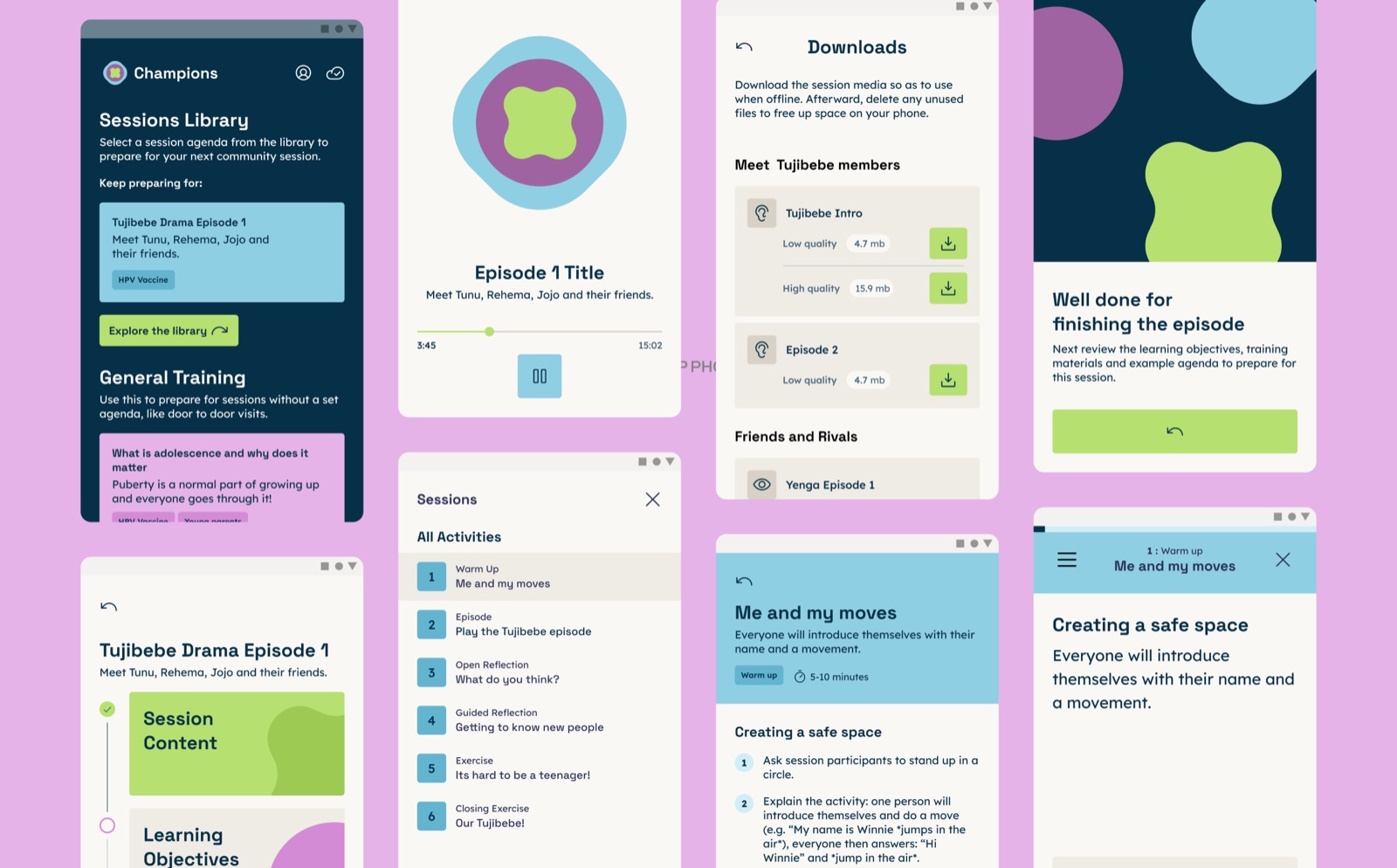
Champions is an offline-first facilitator app. Community health workers and young women use it to prepare and run health sessions — on immunisation, HPV and sexual and reproductive health — with people who have limited or no access to reliable information.
- countries
- 4
- languages
- 4
- co-creators
- 85+
- architecture
- Offline-first
01 · Context
A programme that changed who it was for.
Champions began as Girl Champions. Girl Effect trained 15-to-19-year-old girls in Tanzania to share content from Tujibebe — the brand that reaches over 1.7 million girls — with the least connected girls in their communities. Then it changed who it served: a new funder needed vaccination and HPV information to reach rural households, so the team tested the existing app with community health workers. It held. The product stayed; the user changed. I joined Here I Am Studio as a junior designer in 2023, during the Ethiopia expansion, and stayed with the programme for three years.
02 · The challenge
How do you scale a proven experience without making it harder to use?
- 01
Different country requirements, languages and contexts
- 02
Limited digital confidence among some users
- 03
A growing amount of programme content to manage
- 04
Adapting workflows to existing CBO practices across borders
- 05
Keeping the core experience familiar while adding capability
03 · Approach
Designing for the system, not just the screen
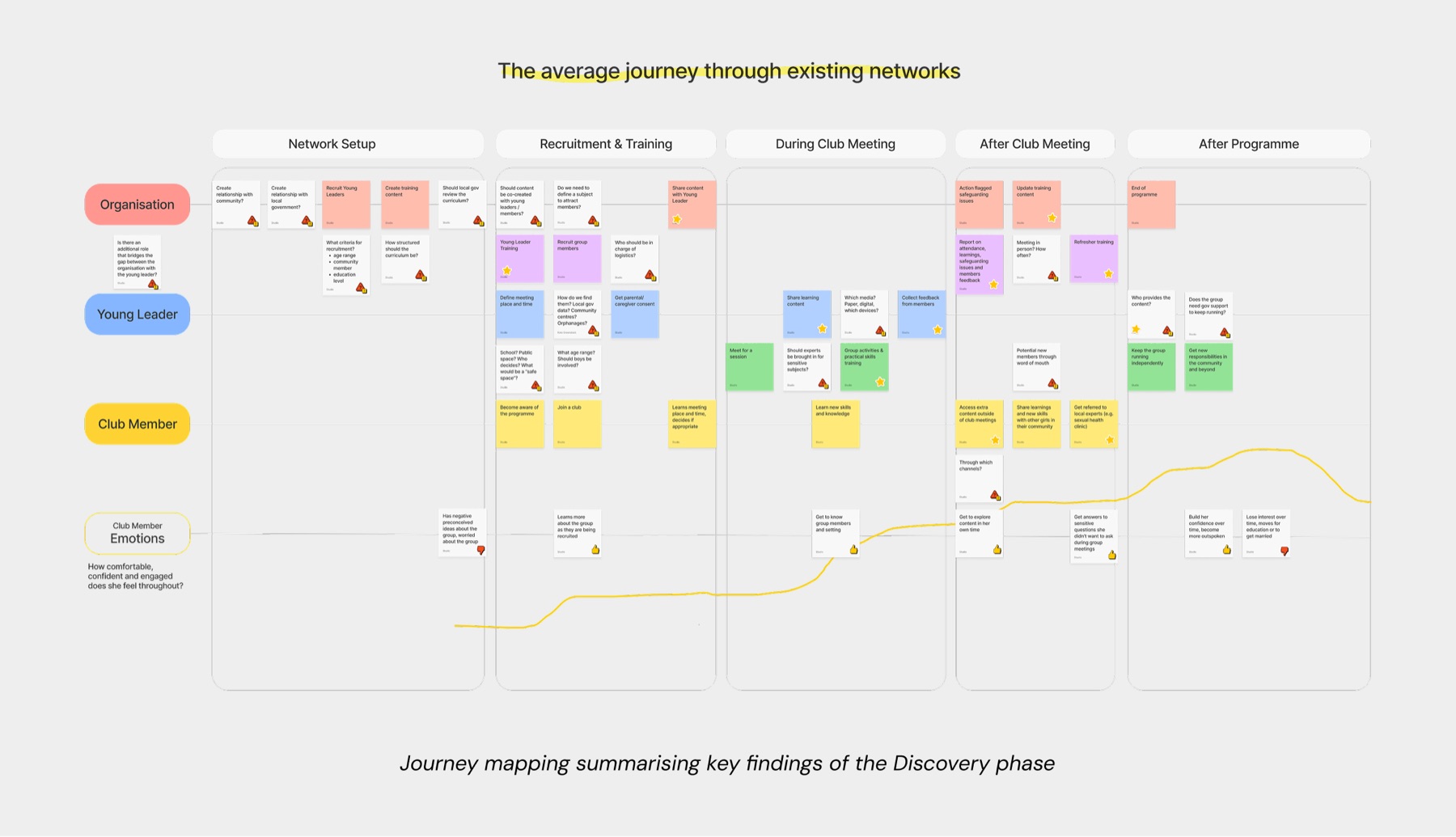
Rather than treating every country as a separate product, I worked with the team to identify what needed to remain consistent and what needed to adapt.
Understand
Co-design on the ground
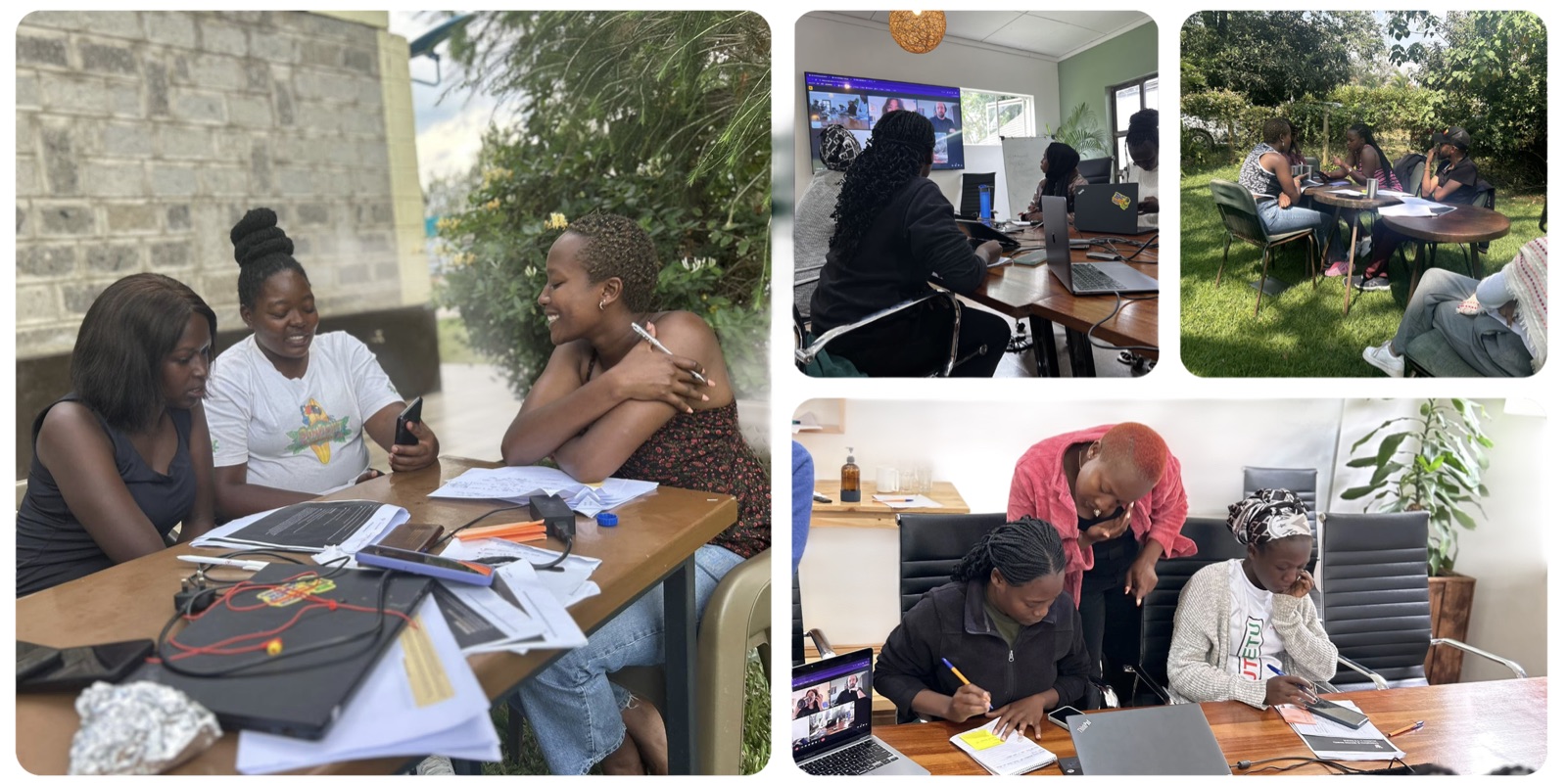
Collaborating with community leaders in Migori, Nairobi and Abuja to understand real-world usage.
Structure
Simplify the IA
Rationalising complex multi-country content trees into offline-first, scannable card patterns.
Design
Visual rhythm
Consistent visual cues and large typography for varied digital-literacy levels.
Validate
Field testing
Diagnostic A/B testing on sharing workflows in Kenya before rolling out in Nigeria.
Adapt the experience to the market, not the product into four different products.
Ethiopia & Tanzania
Where I came in
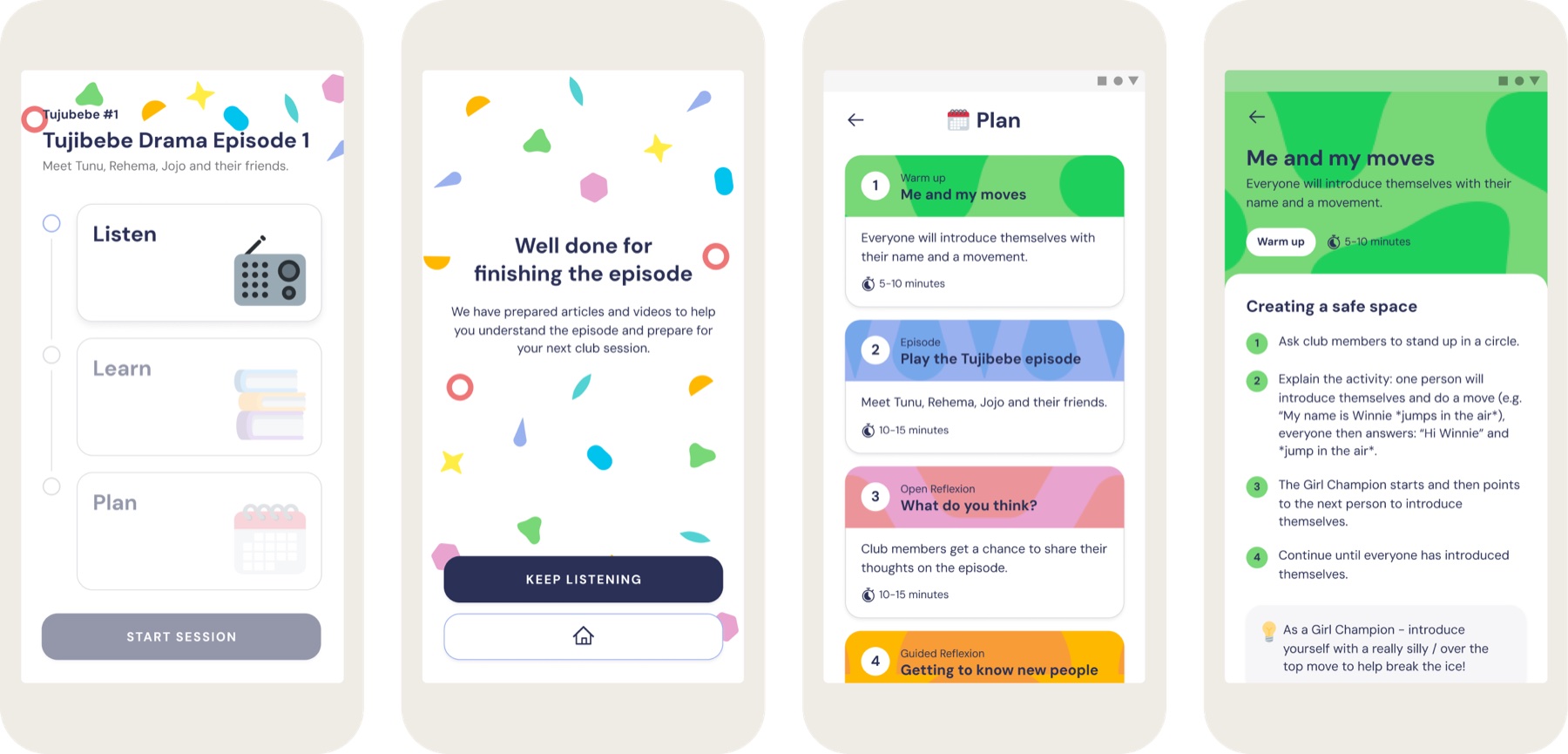
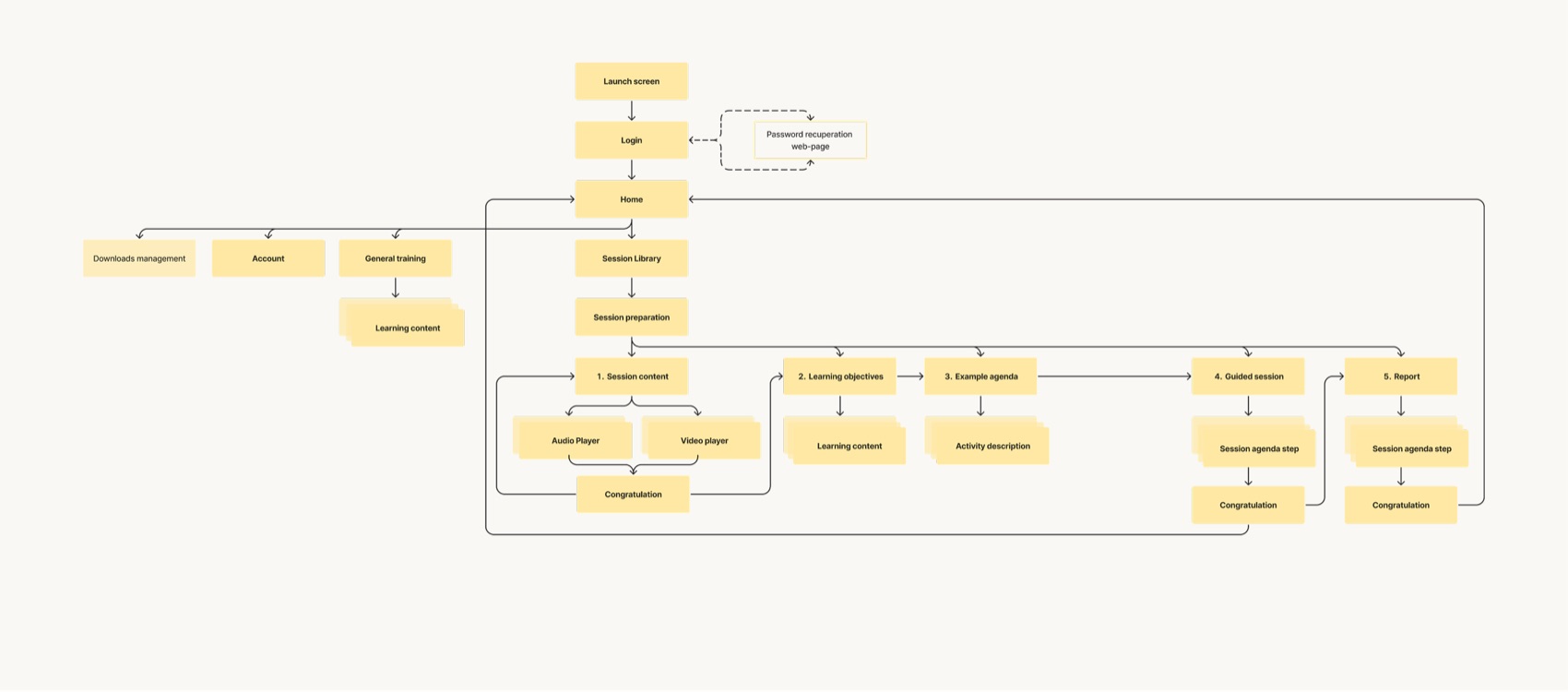
Tanzania is where Champions started — piloted there before I joined. Ethiopia was the first expansion beyond it, and where I came onto the team as a junior designer. The work was adapting content structure and session flow to a second health system, making the app multilingual, and adding a CMS so programme teams could publish without going through engineering. I did research support, high-fidelity design and build support; product ownership and design leadership on this phase sat with colleagues at the studio.
Kenya
Where my role changed
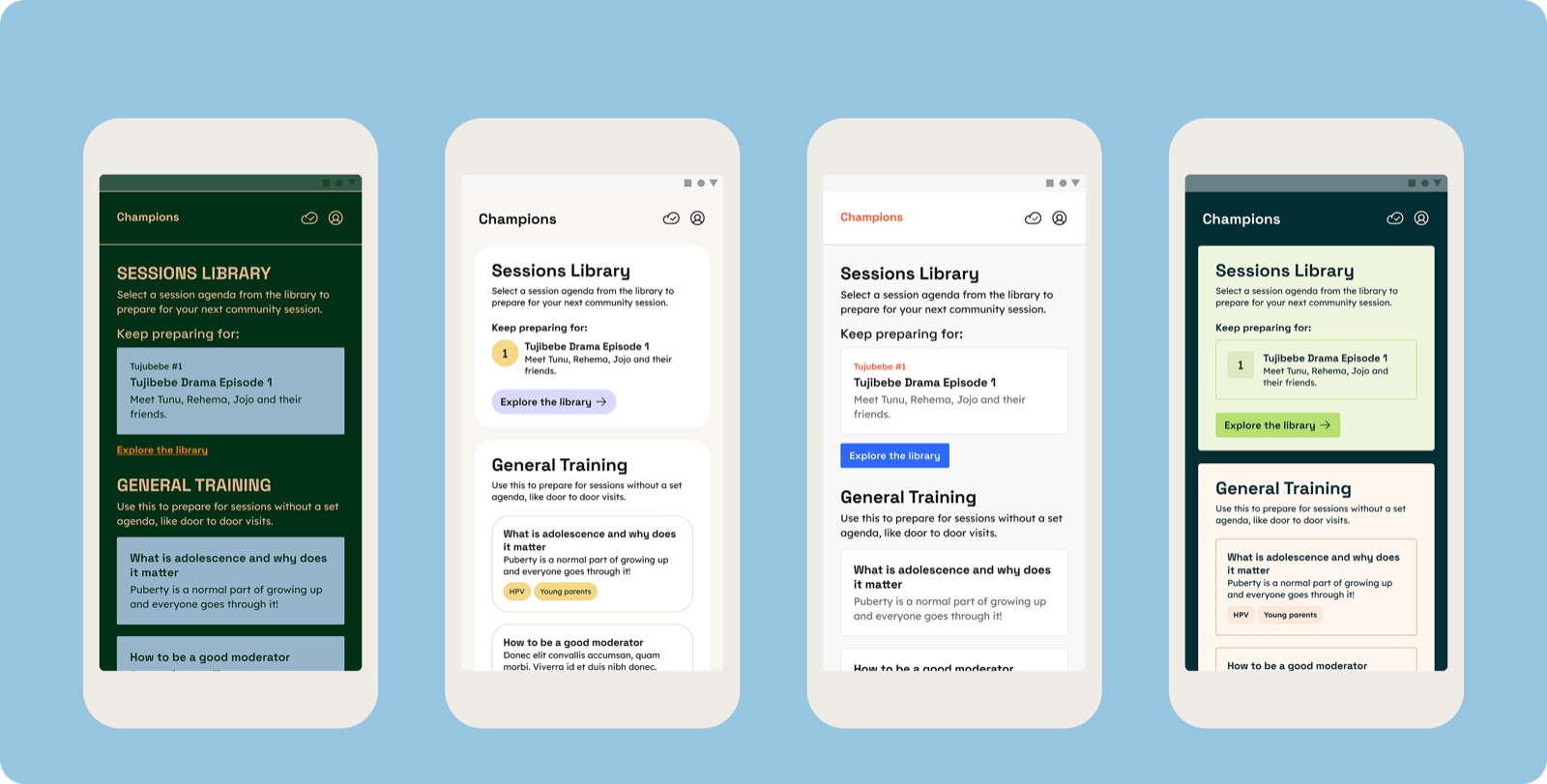
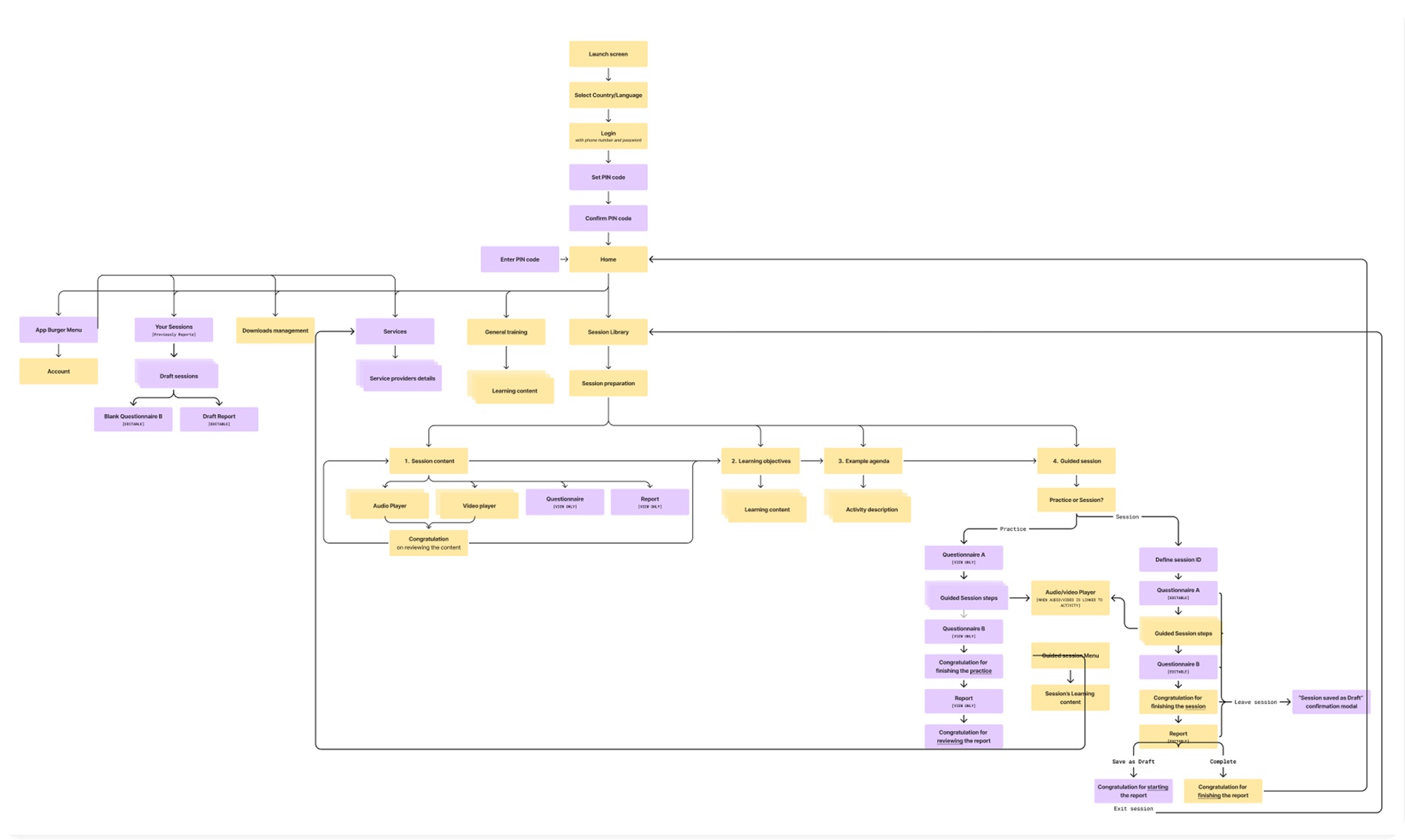
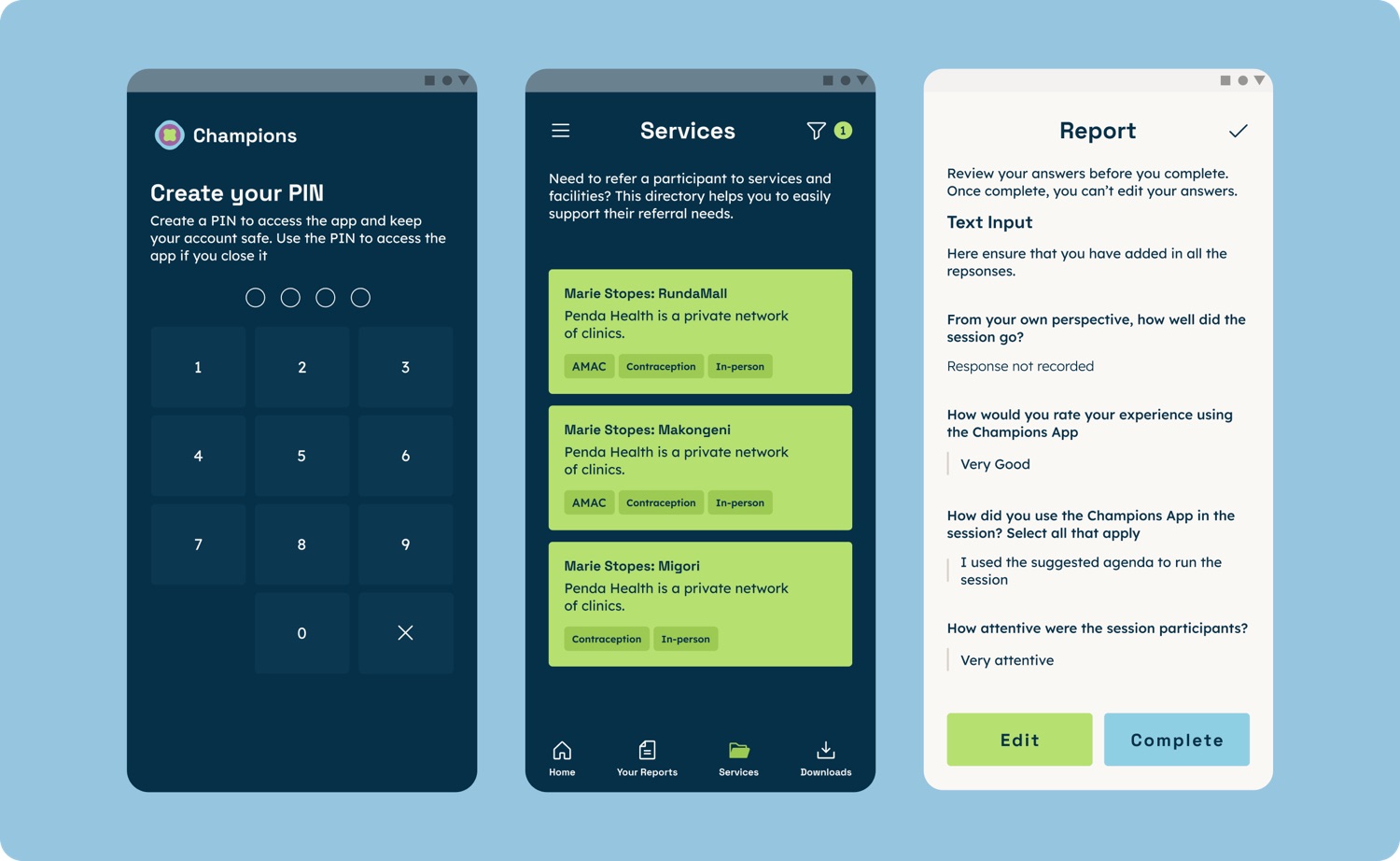
Kenya was the third country, and the first where I led from the front. The Tanzanian model could not simply be translated across: the audience shifted to young women and the conversations moved onto sexual and reproductive health. Research with facilitators surfaced friction in the session flow and content navigation that had been accepted as normal. We reshaped the information architecture around it, and added a services directory, draft reports that survive a dropped connection, and PIN-lock privacy.
Nigeria
Designing for gatekeepers and trust
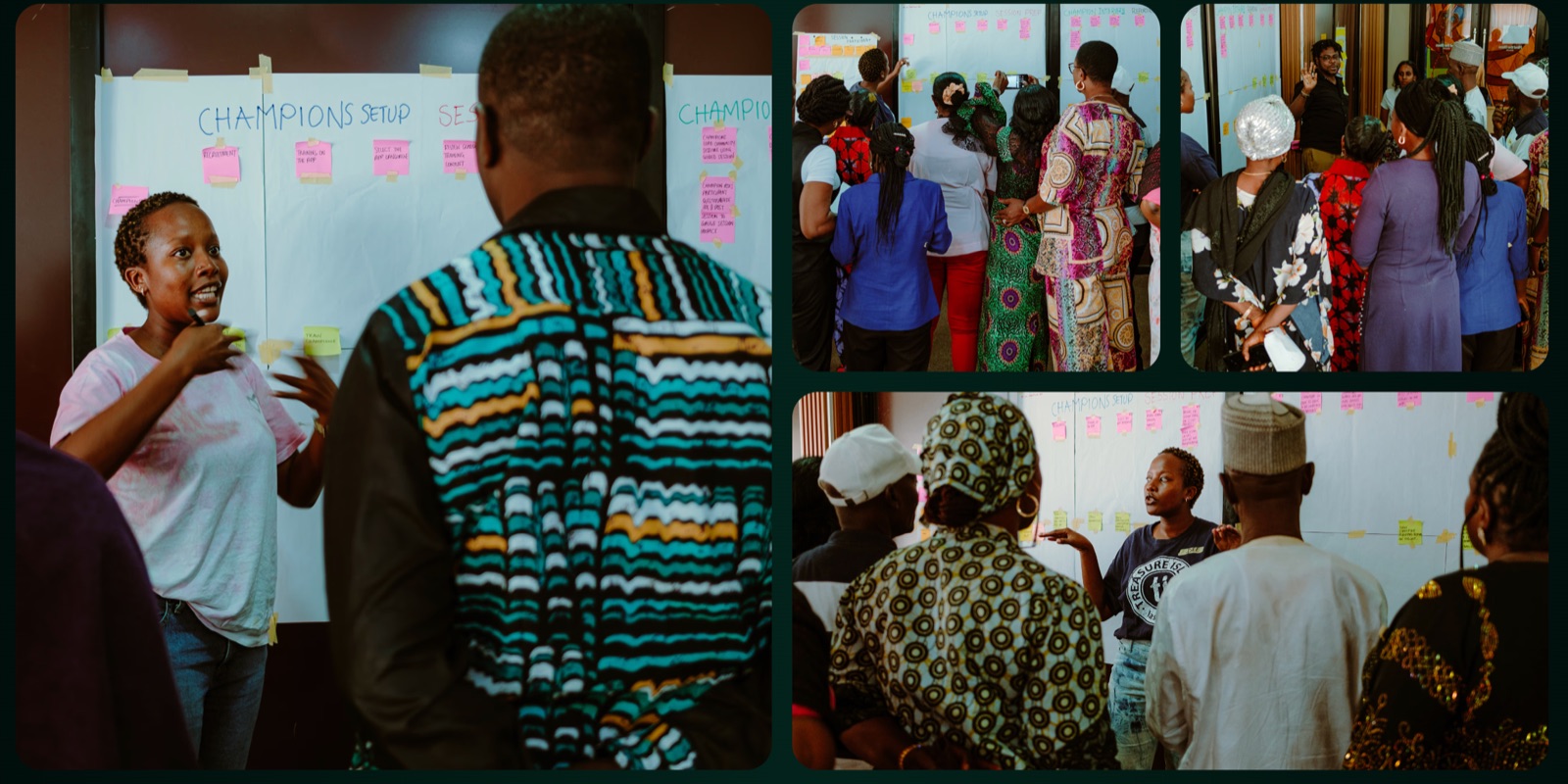
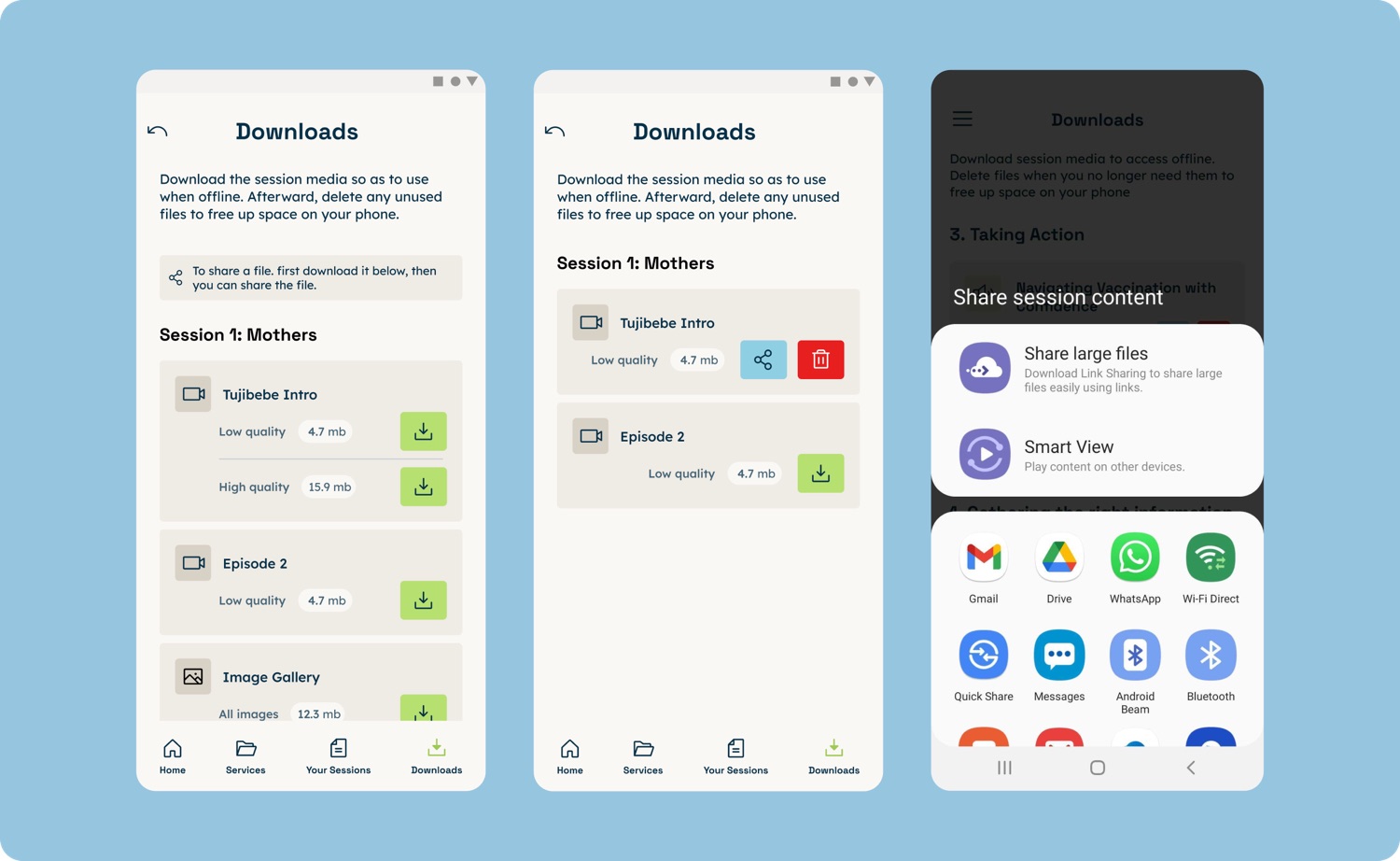
Nigeria presented a distinct challenge. Community health programmes required explicit approval from local gatekeepers — community leaders, school administrators and health officials — before facilitators could begin sessions. That is a sequencing problem, not an interface one. I co-led the workshops in Abuja and co-led the design of a content-sharing flow that let facilitators send session material ahead of a visit. We tested it in Kenya first, then brought it into the shared product rather than building a Nigerian variant.
Outcome
What this changed
The framework held. One product served four markets without fragmenting into four: country teams could configure content, language and session structure independently while the core architecture stayed shared. What began as a girls’ network model in Tanzania ended up carrying immunisation, HPV and SRH programmes across Ethiopia, Kenya and Nigeria.
What I learned
Scaling a product is as much about protecting simplicity as adding capability.
Working alongside community organisations in Abuja and Migori taught me that software for these contexts has to fit into human systems that already exist — the community leader who grants access, the trust a Champion has already built — and into screens second.
The lesson I carry into every market now is that context isn’t something you design around. It’s part of the product. Connectivity, language, trust, privacy, community structure — when those change, the experience has to change with them while still feeling like the same product.
Champions is a Girl Effect programme, designed and built by a multidisciplinary team at Here I Am Studio and running since 2022. I joined as a junior designer in 2023, during the Ethiopia expansion, and grew into co-leading research and design on the Kenya and Nigeria rollouts. Product ownership and design leadership on the earlier phases sat with colleagues at the studio. Research was carried out with Girl Effect field teams across Tanzania, Ethiopia, Kenya and Nigeria.